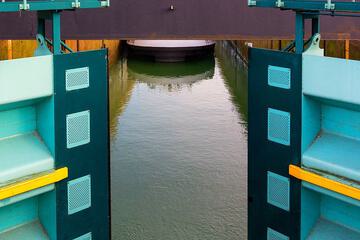
Locks: Key structures for water transport
Gummi Hansen, a specialist in large-volume rubber profiles for hydraulic steel structures
Locks: Key structures for water transport – and what really makes them watertight?
For centuries, locks have secured water transport on rivers and canals. They overcome height differences, connect waterways, and turn inland shipping into a cornerstone of sustainable logistics. What often remains hidden from view: to ensure that lock gates close securely and remain watertight even after decades, highly specialised components are required – such as the rubber profiles from Gummi Hansen.
Function & importance of locks
Through the controlled filling and emptying of the lock chambers, locks enable vessels to "rise" or "fall" between different water levels. They are indispensable for a continuous transport chain – both economically and ecologically.Technology that seals reliably
Gummi Hansen, a specialist in large-volume rubber profiles for hydraulic steel structures, supplies precisely the components that keep locks permanently functional.
Technical specifications of the rubber profiles:
- Maximum profile dimensions:
- 360 x 360 mm (circular extrusion head)
- 450 x 60 mm (wide slot extrusion head)
- Length: Up to 40 metres
- Weight: Up to 1,000 kg per profile
- ✅ Certified rubber compounds according to:
- DIN EN ISO 19704-2 (standard for hydraulic steel structures)
- DIN EN 681
- DIN 7865
Through this specialisation, Gummi Hansen makes a decisive contribution to ensuring that locks – whether inland or on international waterways – remain operationally safe, low-maintenance, and watertight in the long term.
Conclusion:
Locks are far more than technical transitions – they are highly complex infrastructure elements. And it is companies like Gummi Hansen that, with innovative strength and precision, ensure these structures continue to function safely in the future.
#waterways #hydraulicsteelstructures #logistics #locks #infrastructure #rubber #inlandshipping #sealingtechnology #engineering #sustainability